
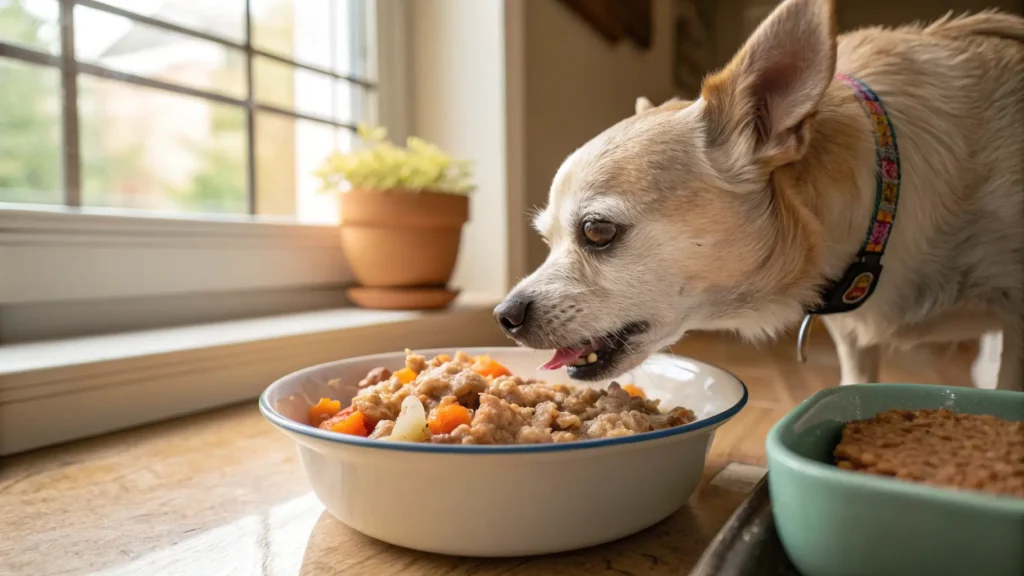
When my dog lost his last tooth, I thought I’d reached the end of the road with raw and homemade feeding. But I quickly realized something important: dogs don’t need teeth to enjoy food — they just need the right texture. Once I made a few simple adjustments, he was back to licking his bowl clean, and I felt relieved knowing he was still getting everything his body needed.
If you’re asking yourself, “My dog has no teeth — what can I feed him?” the answer is softer than you think. Literally.
My Dog’s Daily Feeding Routine
Here’s the real plan I use every single day — balanced, soft, and tailored for a toothless pup.
Morning Meal
- Ground turkey or chicken (lightly cooked or raw, finely ground)
- Pureed pumpkin or zucchini for fiber
- A pinch of calcium powder or crushed eggshell
- Warm bone broth stirred in until soft and smooth
Evening Meal
- Shredded chicken thigh or soft salmon flakes
- Mashed sweet potato or butternut squash
- Small amount of ground organ meat (liver or kidney)
- Probiotic sprinkle mixed in
Everything ends up at a mashable, spoon-soft texture — easy to lap up, no chewing required.
Why This Works
Dogs don’t grind their food the way humans do. Their stomachs are designed to handle food with little chewing involved. By softening, blending, and adding moisture, meals stay safe, nourishing, and easy to digest.
I noticed within days that my dog had more energy, better stools, and — most importantly — excitement at mealtime.
For more reassurance, you can read this guide on whether dogs can eat without teeth. It dives deeper into how adaptable dogs really are.
Signs You’re on the Right Track
If your dog is adjusting well, you’ll see:
- A steady appetite (no hesitation at the bowl)
- Stable weight or gradual healthy gain
- Consistent stools (not too loose or hard)
- Eagerness at mealtime
If something feels off — like persistent choking, weight loss, or digestive upset — that’s when a quick check-in with your vet helps.
FAQ – Do I need to buy special dog food for a toothless dog?
Not necessarily. Many commercial wet foods are fine, but homemade meals give you total control over ingredients and nutrition. As long as the food is soft, safe, and balanced, your dog doesn’t need anything “special” from a bag.
Feeding Without Teeth Is Still Feeding With Love
When my dog lost his teeth, I thought our feeding journey would become complicated or limited. But it hasn’t. With the right textures, simple ingredients, and a little creativity, mealtime remains one of the happiest parts of his day.
The lesson I’ve learned is this: a dog without teeth can still thrive. What matters isn’t crunch — it’s nourishment, comfort, and the bond we share at every meal.