
More and more dog owners are turning away from kibble and commercial canned foods and discovering the benefits of raw feeding. The idea is simple: give dogs fresh, natural meals that are closer to what their ancestors ate in the wild. For many pups, this means better digestion, shinier coats, more energy, and even improved long-term health.
But switching to raw isn’t as simple as tossing meat in a bowl. A proper raw diet is about balance, safety, and variety. From choosing the right proteins to understanding how to feed puppies, seniors, and even toothless dogs, raw feeding requires care and attention.
That’s what this guide is all about. Whether you’re raising a new puppy, caring for a senior dog, or simply exploring healthier homemade meals, you’ll find everything you need here — from benefits and risks to recipes and vet-approved tips.
- Puppy Power Bowl
- What Is a Raw Dog Food Diet?
- Benefits of Raw Dog Food Recipes
- Raw Feeding for Puppies
- Raw Feeding for Senior Dogs (and Dogs With No Teeth)
- Homemade Raw Dog Food Recipes You Can Try
- Safety Tips for Raw Dog Food
- Supplements to Support Raw Diets
- Frequently Asked Questions About Raw Dog Food
- Raw Feeding Done Right
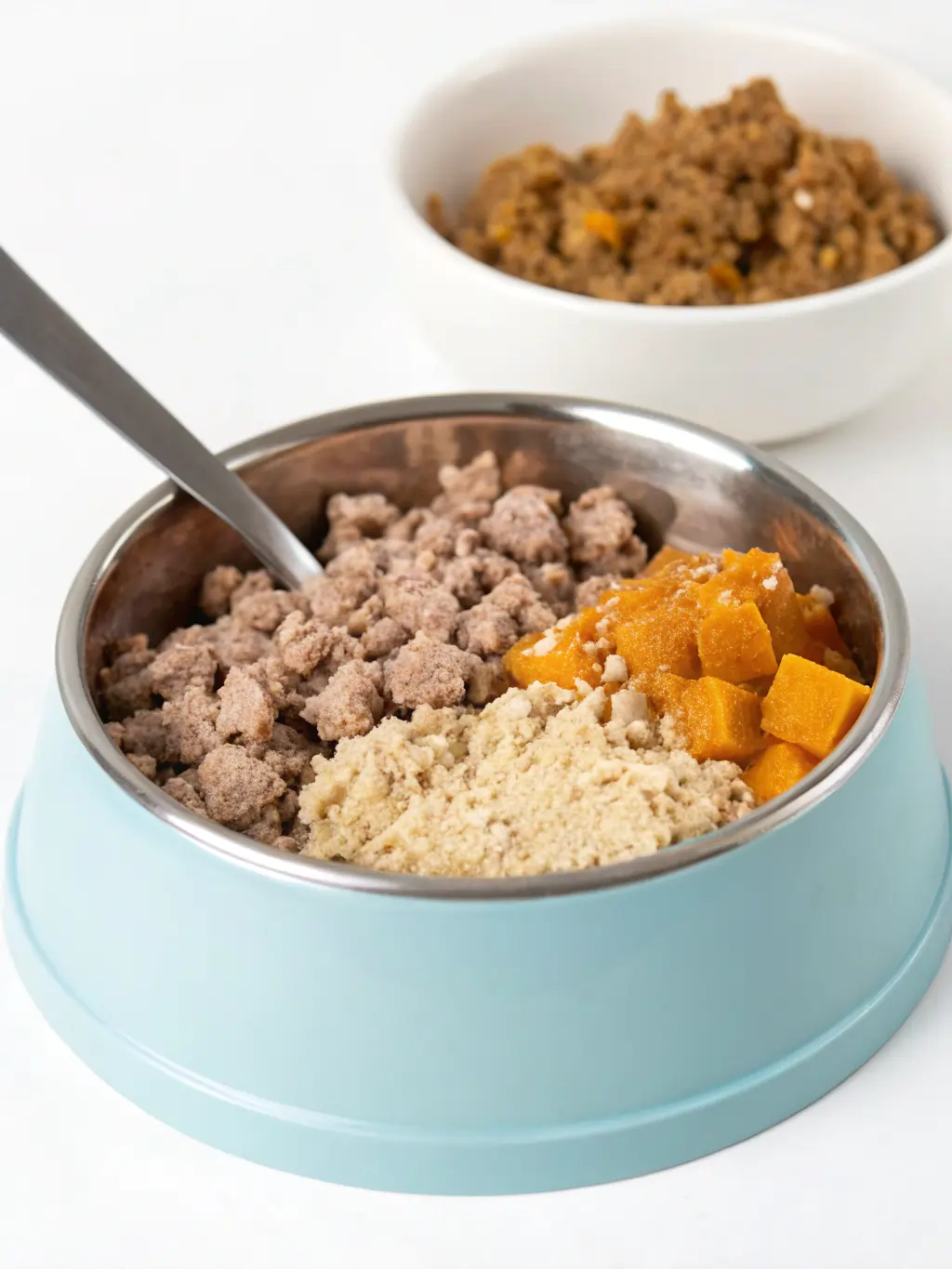

Puppy Power Bowl
Ingredients
Equipment
Method
- Measure and combine ground turkey and finely minced chicken liver in a mixing bowl.
- Add bone meal powder or finely ground eggshell for calcium.
- Stir in pumpkin puree and fish oil until fully blended.
- Blend until spoon-soft. Serve fresh or store in an airtight container for up to 2 days in the fridge.
Notes
What Is a Raw Dog Food Diet?
A raw dog food diet, often called “BARF” (Biologically Appropriate Raw Food), is built on the idea that dogs thrive on meals similar to what their wild ancestors ate — fresh meat, bones, and natural plant matter. Instead of relying on highly processed kibble, raw diets focus on whole, unprocessed ingredients that are closer to nature.
The Core Components of a Raw Diet
Most balanced raw recipes include:
- Muscle meat – the main protein source, such as chicken, beef, turkey, or fish
- Organ meats – nutrient-dense parts like liver, heart, and kidney
- Bone (or calcium alternatives) – raw meaty bones, bone meal powder, or eggshell
- Vegetables and fruit – for fiber, antioxidants, and vitamins (steamed or pureed for easier digestion)
- Healthy fats – fish oil, flaxseed, or coconut oil for skin and coat health
The Philosophy Behind Raw Feeding
Supporters believe raw feeding provides:
- Nutrition closer to a dog’s natural diet
- Fewer artificial fillers and preservatives
- Better digestibility and nutrient absorption
At the same time, critics warn about food safety risks (like bacteria) and nutrient imbalances if meals aren’t prepared carefully. This is why raw feeding should be thoughtful and precise — not just meat in a bowl.
Benefits of Raw Dog Food Recipes
One of the biggest reasons dog parents switch to raw is the visible difference it makes. Within weeks of transitioning, many notice improvements in their dogs’ appearance, energy, and overall health. From my own experience, the changes were undeniable.
Healthier Coat and Skin
Raw diets rich in protein and natural fats often lead to shinier coats and healthier skin. Many owners also report reduced itching and fewer allergy flare-ups compared to kibble-fed dogs.
Improved Digestion
Fresh, unprocessed foods are easier for many dogs to digest. Stools often become smaller, firmer, and less odorous. Dogs prone to bloating or upset stomachs may also benefit from the simplicity of raw ingredients.
More Balanced Energy
Because raw meals aren’t packed with fillers or carbs, dogs tend to have more stable energy levels. Puppies stay playful without sugar crashes, and adult dogs maintain steady stamina throughout the day.
Dental Health (for Dogs With Teeth)
Chewing raw meaty bones can help scrape plaque and keep teeth strong. Of course, this doesn’t apply to senior or toothless dogs — but for healthy adults, it can be a natural dental aid.
Weight Management
Raw diets allow you to control portions and ingredients directly. By avoiding excess carbs and processed additives, it’s easier to maintain a healthy weight, which reduces strain on joints and supports long-term mobility.
Raw Feeding for Puppies
Feeding puppies raw can feel intimidating, but it’s absolutely possible — and many vets agree it can support healthy growth when done correctly. Puppies need more precise nutrition than adults, which means every meal counts. Unlike grown dogs, they can’t afford to have “imbalanced” days, so consistency is key.
The Foundation of a Raw Puppy Diet
A balanced raw diet for puppies typically includes:
- Muscle meat for protein and energy
- Organ meats like liver and kidney in small, measured amounts
- Bone or calcium powder to support developing bones and teeth
- Vegetables (lightly steamed or pureed) for vitamins and fiber
- Healthy fats like fish oil for brain and joint development
Lessons From Experience
When I first started, I quickly learned that puppies thrive on variety and moderation. Feeding only chicken led to nutrient gaps, while too much liver caused tummy trouble. Overfeeding also made my Lab puppy grow too quickly, which risked joint strain. Steady, balanced growth is much healthier than rapid weight gain.
If you’re considering raw for your puppy, these guides will help:
- Best Raw Dog Food for Puppies
- Raw Diet for Puppies: Safe Start Tips
- Raw Meat for Puppies: Is It Safe?
- Feeding a Puppy Raw: What Worked (and What Didn’t)
- Best Raw Food for Large Breed Puppies
- Vet-Approved Raw Puppy Meals
Each one dives deeper into the realities of feeding raw to puppies — the good, the bad, and the lessons learned.
Raw Feeding for Senior Dogs (and Dogs With No Teeth)
Raw feeding isn’t just for young, energetic pups — it can also work beautifully for seniors, even those who’ve lost their teeth. Older dogs often need gentler textures and easier-to-digest meals, but with a few adjustments, they can still enjoy the benefits of raw.
Adapting Raw for Seniors
For senior dogs, I focus on:
- Softer textures — blending or mashing meats and veggies so they can lap food easily
- Moisture-rich meals — adding bone broth or goat’s milk for hydration
- Gentle proteins — turkey, salmon, or slow-cooked beef are easier on digestion
- Calcium alternatives — eggshell or bone meal powder instead of chewing bones
- Supplements — probiotics, fish oil, and joint support as needed
Feeding Toothless Dogs
Losing teeth doesn’t mean losing mealtime joy. Dogs can swallow soft food without chewing, and with the right consistency, they thrive. Meals should be mashable with a spoon — safe, moist, and easy to swallow.
For more details, these guides will help you adapt raw diets for seniors and toothless pups:
- Homemade Dog Food for Senior Dogs With No Teeth
- What to Feed a Dog With No Teeth?
- My Dog Has No Teeth — Here’s What I Feed Him Daily
- Can Dogs Eat Without Teeth?
- Dog Food for Dogs With No Teeth
Together, these resources show that raw feeding can be adapted for every life stage — from playful puppies to gentle seniors.
Homemade Raw Dog Food Recipes You Can Try
One of the best parts of raw feeding is that you can create meals tailored to your dog’s needs. Whether you have a growing puppy, an energetic adult, or a gentle senior, the basics remain the same: balance protein, organ, bone or calcium, and a small portion of vegetables.
Here are a few simple starter recipes I’ve used with success:
Recipe 1: Puppy Power Bowl
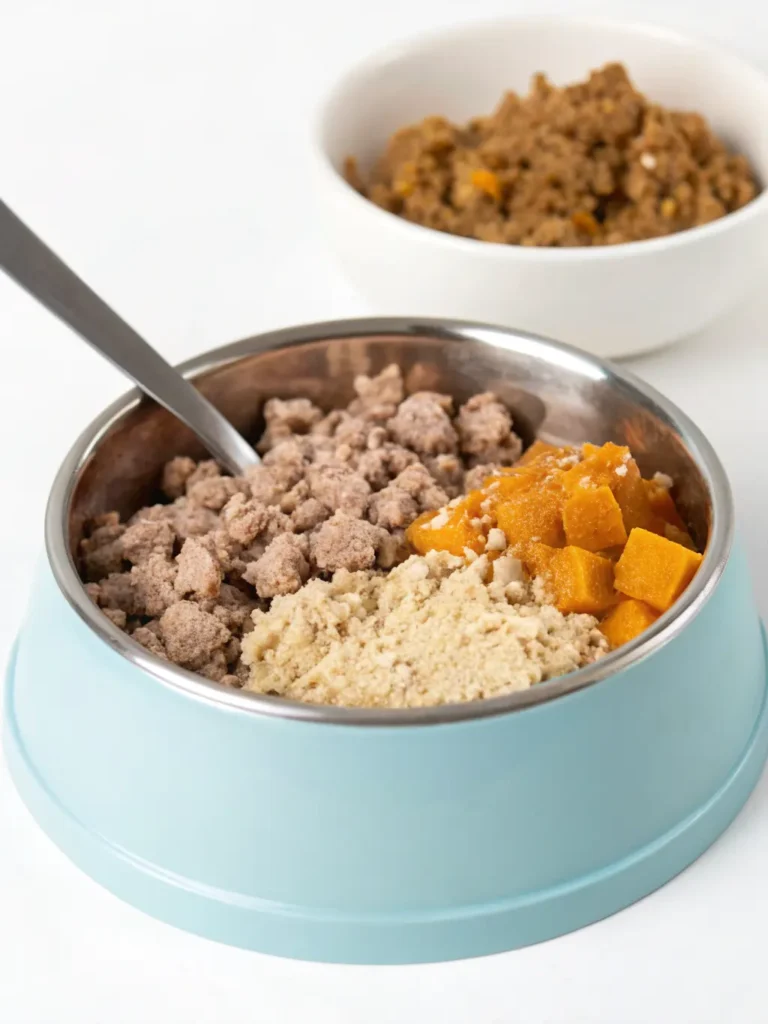
- 1 cup ground turkey
- 1 tablespoon chicken liver (finely minced)
- ½ teaspoon bone meal powder or crushed eggshell
- ¼ cup pumpkin puree
- 1 teaspoon fish oil
Blend or mix thoroughly until spoon-soft. This meal supports healthy growth while staying easy to digest.
Recipe 2: Adult Energy Mix
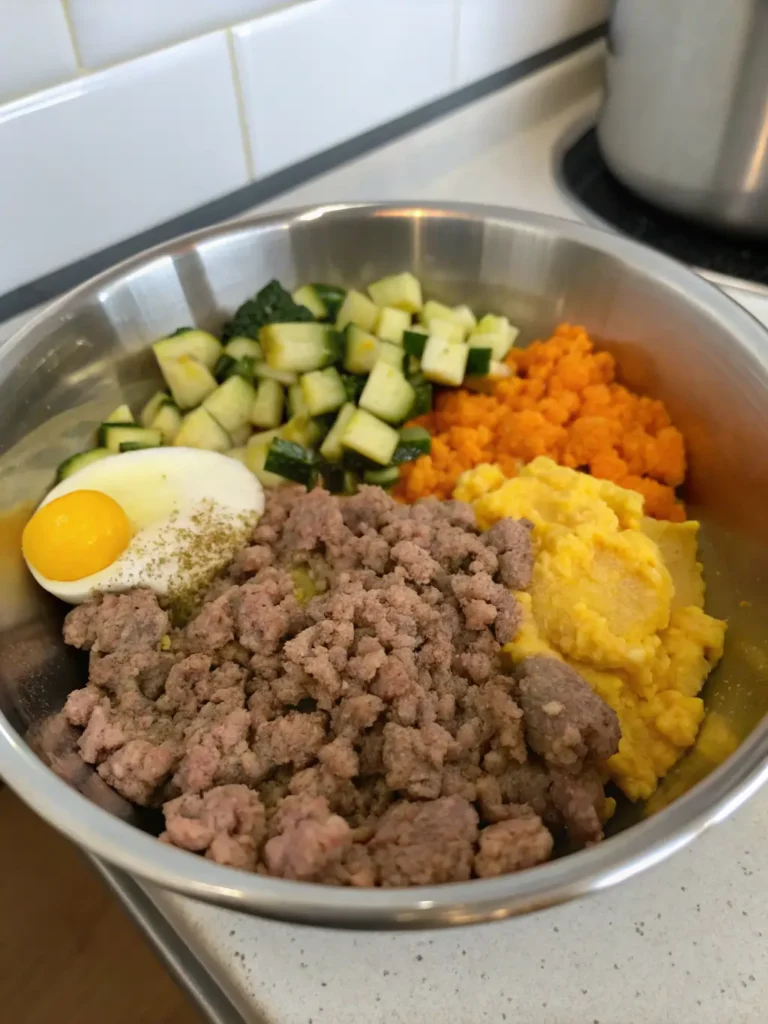
- 1 cup ground beef or lamb
- ½ cup steamed and pureed zucchini
- ¼ cup mashed sweet potato
- 1 raw egg (with shell ground finely or replaced with calcium powder)
- 1 probiotic capsule opened and mixed in
Perfect for active adult dogs who need balanced nutrition and steady energy.
Recipe 3: Senior Comfort Mash

- 1 cup poached salmon or shredded chicken thigh
- ½ cup pumpkin or butternut squash mash
- ¼ cup bone broth (lukewarm, not hot)
- 1 teaspoon coconut oil
- ½ teaspoon calcium powder
Soft, hydrating, and gentle on the stomach — ideal for senior or toothless dogs.
Storage and Prep Tips
- Batch cook or prep: Make meals in bulk, freeze in portions, and thaw as needed.
- Portion control: Feed 2–3% of your dog’s ideal adult body weight daily (adjust for puppies and seniors).
- Always thaw safely: Defrost in the fridge, not on the counter, to reduce bacterial risks.
Safety Tips for Raw Dog Food
Feeding raw has plenty of benefits, but it also comes with responsibilities. Puppies, seniors, and even healthy adults rely on us to make sure their meals are safe. Proper handling, sourcing, and preparation are what make raw diets work long-term.
Handle Raw Meat Safely
- Wash your hands thoroughly before and after preparing meals.
- Use separate cutting boards and utensils for your dog’s food.
- Clean bowls immediately after feeding to prevent bacterial buildup.
Source Quality Ingredients
- Buy human-grade meats from trusted butchers or suppliers.
- Choose grass-fed, free-range, or wild-caught when possible.
- Avoid discount or mystery meats — quality matters more than price.
Reduce Parasite Risk
- Freeze meats for at least 72 hours before feeding.
- Avoid feeding raw pork unless it has been frozen properly.
- Stick with reputable suppliers who follow safety standards.
Avoid Dangerous Foods
- Never feed cooked bones — they splinter and can cause injuries.
- Keep liver portions small (too much can cause vitamin A toxicity).
- Avoid onions, garlic, grapes, and chocolate — all toxic to dogs.
Handled with care, raw feeding is no more dangerous than cooking dinner for yourself. It’s about awareness and consistency.
Supplements to Support Raw Diets
Even the best homemade raw dog food recipes sometimes need a boost. While whole foods provide most nutrients, certain vitamins and minerals can be tricky to balance — especially if your dog isn’t getting a wide variety of proteins. That’s where supplements come in.
Calcium Sources
Raw meaty bones are the traditional calcium source, but for puppies, seniors, or dogs with no teeth, that’s not always possible. In those cases, I use:
- Ground eggshell powder (½ teaspoon per pound of meat)
- Bone meal powder (vet-approved dosage)
Probiotics and Digestive Enzymes
A healthy gut helps dogs absorb nutrients and prevents stomach upset during diet transitions. Probiotics and enzymes can:
- Improve stool consistency
- Reduce gas and bloating
- Support immune health
Omega-3 Fatty Acids
Fish oil or flaxseed oil adds essential fatty acids that support:
- Skin and coat health
- Brain development in puppies
- Joint health in seniors
Multivitamins (When Needed)
If you’re feeding a limited selection of proteins or rotating ingredients slowly, a high-quality canine multivitamin can help fill small gaps.
The goal isn’t to overload your dog with pills — it’s to cover the essentials that raw alone may not fully provide.
Frequently Asked Questions About Raw Dog Food
How do I make my own raw dog food?
Start with a balanced formula: muscle meat for protein, organ meats for vitamins, a calcium source (like ground bone or eggshell powder), and a small portion of vegetables or healthy fats. Always use human-grade ingredients, freeze meat before use, and follow safe food handling practices.
What is the 80-10-10 rule for raw dog food?
The 80-10-10 rule is a raw feeding guideline:
- 80% muscle meat
- 10% organ meat (half of this should be liver)
- 10% bone
This ratio mimics the natural prey diet of wild canines. However, for puppies, seniors, or dogs with special needs, you may need to adjust this balance with your vet’s guidance.
What are the best ingredients for raw dog food?
The best ingredients are fresh, whole, and varied. Common staples include:
*Healthy fats: fish oil, flaxseed oil, coconut oil
*Meats: chicken, turkey, beef, lamb, or fish
*Organs: liver, heart, kidney
*Calcium: ground bone, bone meal, or eggshell powder
*Vegetables: pumpkin, spinach, zucchini, carrots (steamed or pureed)
Why do vets say not to feed raw?
Some vets discourage raw feeding due to concerns about bacteria (like Salmonella), unbalanced nutrition, or risks from feeding bones. These are valid points if raw feeding is done carelessly. With proper hygiene, safe ingredient sourcing, and balanced recipes, many of these risks can be managed. Some vets remain cautious simply because raw diets require careful oversight.
Do dogs do better on a raw diet?
Many owners report that their dogs thrive on raw: shinier coats, improved digestion, healthier stools, and better energy. However, not every dog is the same. Some do well on high-quality kibble or cooked diets. The key is to find what works best for your dog’s health, lifestyle, and needs.
What is the best vegetable for dogs?
Pumpkin is one of the best vegetables for dogs. It’s gentle on digestion, rich in fiber, and supports gut health. Other excellent options include spinach, zucchini, and carrots — always steamed or pureed so dogs can absorb the nutrients more easily.
Raw Feeding Done Right
Raw feeding isn’t just a trend — it’s a way to give your dog meals that are closer to nature, fresher, and often healthier than processed alternatives. From puppies to seniors, and even dogs with no teeth, raw diets can be adapted to fit every life stage.
The keys to success are balance, safety, and consistency. Every bowl should provide protein, organs, calcium, and a touch of vegetables or healthy fats. Handle ingredients carefully, source from trusted suppliers, and use supplements when needed to cover nutritional gaps.
If you’re new to raw feeding, start small, learn from experience, and use resources like the guides linked throughout this article. Each one is written from real-life lessons — from raising puppies on raw to adapting meals for senior and toothless dogs.
In the end, raw dog food recipes aren’t just about nutrition. They’re about giving your dog food that’s made with care — food that fuels their body, supports their health, and turns every mealtime into a moment of joy.