
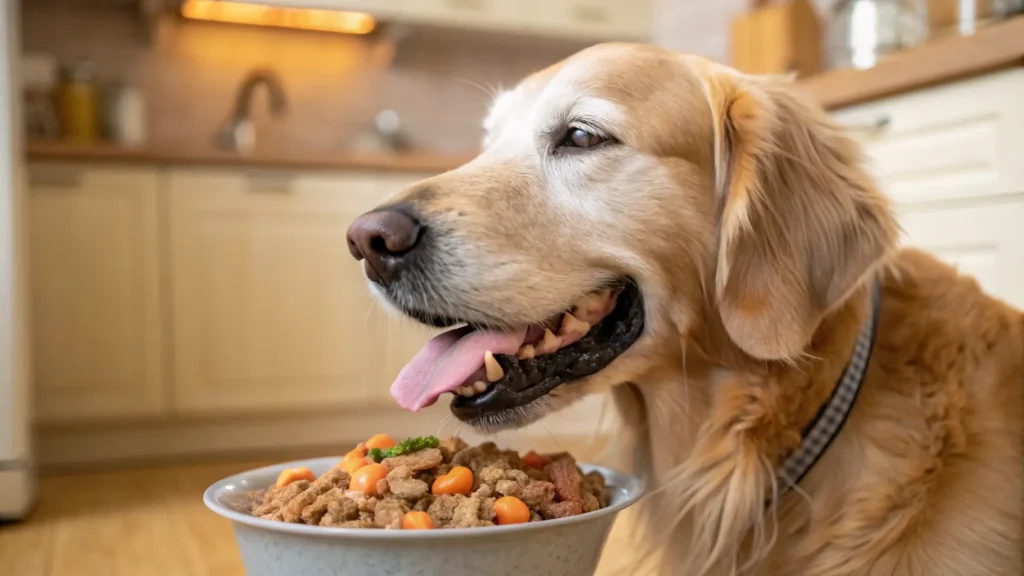
If your dog’s lost a few (or all) of their teeth, feeding them can suddenly feel like decoding a puzzle you never signed up for. I’ve been there — staring at the food bowl, wondering what’s soft enough, healthy enough, and still satisfying enough for a toothless pup to enjoy.
Let’s be clear about one thing: losing teeth doesn’t mean losing joy at mealtime. You don’t need to default to canned mush or carb-heavy kibble soaked in water. In fact, dogs with no teeth can still eat nutritious, raw, and even homemade meals — if you tweak the texture just right.
What Makes Good Dog Food for Toothless Dogs?
The goal is simple: easy to lap, safe to swallow, and gentle on gums. You want foods that are:
- Moist and mashable (think pâté texture or thick stew)
- Nutritionally complete, especially for seniors or recovering dogs
- Free of hard chunks (no bones, dry kibble, or sharp cartilage)
If you’re raw feeding, that doesn’t have to stop now. You’ll just need to grind the meat and swap hard bones for calcium powder or soft, blended alternatives.
Soft Food Options I’ve Used With Success
Here are some of the go-to foods I’ve tried (and loved) for my own senior and tooth-challenged dogs:
Raw-Friendly
- Ground turkey, beef, or chicken (finely minced or blended with water/broth)
- Organ meats like liver and heart, blended smooth
- Raw goat’s milk or kefir (adds nutrients and hydration)
- Soft steamed veggies like pumpkin, zucchini, or spinach — pureed
- Chia or flaxseed gel for fiber and omega-3s
Cooked Options
- Boiled chicken thighs, shredded finely
- Mashed sweet potatoes
- Cooked oatmeal with bone broth
- Scrambled eggs with a dash of coconut oil
- Soft rice or quinoa base with blended meats
Feeding Tips That Helped Me
- Use a shallow bowl or silicone mat for easier lapping
- Serve food slightly warm — it enhances smell and appetite
- Add broth or warm water to thin out thick textures
- Test spoon-blendability: if you can mash it with a spoon, your dog can handle it
FAQ – Can a dog eat without teeth at all?
Yes — absolutely.
Dogs are incredibly adaptable. They don’t chew the same way humans do anyway. As long as the food is soft enough to swallow and digest, your dog can thrive without teeth. Just remember: monitor for choking risks, introduce new textures gradually, and keep an eye on stool to ensure proper digestion.
What to Feed a Dog With No Teeth? (Here’s What My Toothless Yorkie Eats)
Keyword: what to feed a dog with no teeth
Losing teeth doesn’t mean losing appetite — just ask my little Yorkie. After her last dental surgery, I was convinced I’d be spoon-feeding her broth for the rest of her life. I was wrong. Once I cracked the code on soft-yet-satisfying meals, she was back to licking her bowl clean like nothing had changed.
So, if you’re staring at your dog’s empty dish wondering “What can I even feed you now?” — you’re in the right place.
My Dog’s Daily Toothless Menu
Here’s what I feed her in rotation — all homemade, soft, and gently balanced:
Breakfast Ideas
- Blended beef & liver mash: Ground beef + chicken liver + pumpkin puree + calcium powder
- Egg & veggie scramble: Scrambled egg + steamed zucchini + bone broth
- Oatmeal pudding: Cooked oats with goat milk and chia gel
Dinner Ideas
- Soft raw mix: Finely ground chicken + goat milk + flax + shredded spinach
- Meat & mash bowl: Shredded turkey thigh + mashed sweet potato + broth
- Soft salmon mix: Cooked flaked salmon + quinoa + pureed green beans
Note: Everything is soft enough to press with the back of a spoon.
Don’t Forget the Supplements
To make up for the lack of bone crunching and chewing:
- Calcium (from eggshell or powdered bone)
- Digestive enzymes to support gut health
- Fish oil for joint and coat health
- Probiotics, especially after dental surgery or antibiotics
Transitioning Without Stress
Switching to a new texture takes time. Here’s what worked for me:
- Go slow — mix new food with old textures
- Serve at room temp or warm
- Keep portions small at first
- Watch stools — they tell you if digestion’s happy
FAQ – Is wet food better than homemade for dogs with no teeth?
It depends.
Wet food is convenient and often soft enough, but it’s not always nutritionally ideal. Many canned foods contain starch fillers, low-grade meat, or hidden sugars. Homemade gives you total control — and once you nail a few base recipes, it’s surprisingly easy to prep.
My Dog Has No Teeth — Here’s What I Feed Him Daily
Keyword: my dog has no teeth what can I feed him
I’ll be honest — when my dog lost his last tooth, I panicked. I thought our raw feeding days were over. I imagined him refusing everything but soup, or worse, losing weight and energy. Turns out, dogs are far more resilient than we give them credit for.
Feeding a toothless dog isn’t about finding special products — it’s about understanding texture, taste, and trust. Once I simplified my approach, his meals became not only manageable but enjoyable. And he started looking forward to them again.
What His Daily Meals Actually Look Like
This is the real routine I follow — nothing fancy, just nourishing, soft, and safe.
Morning Meal
- Ground turkey or beef (raw or lightly cooked)
- A spoonful of pureed pumpkin or carrot
- Calcium powder or crushed eggshell
- Lukewarm bone broth mixed in until it’s like a thick stew
Evening Meal
- Steamed and shredded chicken thigh
- Mashed sweet potato or squash
- Tiny bit of ground liver (for vitamin A and iron)
- Probiotic sprinkle
I blend everything to a scoopable texture, serve in a shallow bowl, and let him take his time. He doesn’t chew — he licks and laps. And that’s enough.
How I Knew He Was Thriving
After the switch, here’s what I noticed:
- He finished every meal without hesitation
- His energy improved within days
- His stools stayed firm and consistent
- He started greeting the food bowl again like it was a treat
For a dog with no teeth, that’s success.
FAQ – Can I still feed raw to a dog with no teeth?
Yes, but with modifications.
You’ll need to finely grind all meats and organs, skip bones (replace with calcium supplements), and make sure textures are smooth enough to swallow without effort. Raw feeding is still absolutely possible — and arguably even better than canned mush — if you prepare it right.
Can Dogs Eat Without Teeth? I Was Shocked Too
Keyword: can dogs eat without teeth
I’ll admit it — when my vet said my dog could still eat regular meals after losing all his teeth, I didn’t believe her. No teeth? No way. But within a few days, I learned the truth firsthand: dogs don’t chew like we do. In fact, they’ve been swallowing chunks of meat whole for centuries.
The short answer? Yes — dogs absolutely can eat without teeth.
But there’s nuance. What they eat, how it’s prepared, and how their body digests it becomes even more important.
Why Dogs Can Handle Eating Without Teeth
Here’s what surprised me the most:
- Dogs don’t rely on molars to break down food the way humans do
- Their saliva lacks enzymes, so digestion starts in the stomach, not the mouth
- As long as food is soft, moist, and safe to swallow, they can thrive
What really matters is texture and digestibility, not teeth.
How to Support a Toothless Dog’s Digestion
Once chewing is out of the picture, it’s your job to help their stomach do the heavy lifting.
- Cook or blend veggies so fiber doesn’t cause issues
- Grind meats and organs if feeding raw
- Use digestive enzymes and probiotics to aid absorption
- Keep meals hydrated — moisture is essential for gut function
I found that lukewarm, mashable meals made the biggest difference. It wasn’t just easier to eat — it smelled better, tasted richer, and sparked appetite.
FAQ – Will my dog choke without teeth?
Unlikely — but caution is key.
Dogs naturally use their tongues to push food to the back of their throat. Still, always test textures yourself. If you can easily mash it with a spoon, it’s usually safe. Avoid dry, chunky, or sticky foods. When in doubt, blend or add moisture.
Feeding a Toothless Dog Isn’t the End — It’s a New Beginning
When your dog loses their teeth, it feels like everything changes — but the truth is, mealtime can still be nourishing, joyful, and even exciting. You don’t need expensive prescription diets or bland canned food. With a little care, some soft textures, and a shift in mindset, you can craft meals that your dog not only tolerates — but truly enjoys.
I’ve seen it with my own pup. No teeth, no crunch, no problem. What matters most is the love behind the bowl — and your willingness to adapt.
So whether you’re blending beef, spooning out sweet potato, or warming up broth to stir in, just know: you’re doing right by your dog. And trust me — they know it.