
When I first started cooking for my dog, Toby, it wasn’t because I wanted to follow a trend. It was because I wanted to see him happy again. His tail had stopped wagging at mealtime, and his once-bright eyes seemed tired. After vet visits, diet changes, and countless bags of “premium” kibble, nothing seemed to help.
So, I rolled up my sleeves, stepped into the kitchen, and made his first homemade meal. I’ll never forget the way he looked at me that night — hopeful, excited, and ready to eat. And from that moment, I knew I was onto something.
Today, more and more dog parents are making the switch to homemade dog food. The reasons are many:
- The ability to control every ingredient
- The joy of knowing exactly what’s in your dog’s bowl
- The hope of improving health, energy, and happiness
But there’s one thing I quickly learned — fresh doesn’t automatically mean balanced. If you want homemade meals to truly nourish your dog, you need to understand the basics of canine nutrition.
That’s why I’ve created this complete guide — to help you cook with confidence, avoid common mistakes, and serve your dog meals that are as balanced as they are delicious.
Because at the end of the day, food is more than just nutrition — food is love.
Why Choose Homemade Dog Food?
Switching to homemade dog food isn’t just about cooking — it’s about connection. For many of us, it starts with a health concern or a picky eater. For others, it’s simply the desire to give our dogs the freshest, most wholesome meals possible.
1. Health Benefits You Can See
When you control every ingredient, you can avoid unnecessary fillers, preservatives, and artificial colors. You get to choose high-quality proteins, fresh vegetables, and healthy fats that actually support your dog’s coat, skin, and overall wellness — the kind you’ll learn more about in our guide, Healthy Fats for Dogs: What Every Caring Dog Parent Should Know.
Homemade feeding also lets you adjust recipes for specific needs — whether your dog requires more protein, less fat, or a special balance of nutrients. If you’re wondering how those ratios work, our article Balancing Protein, Fat & Carbs: Dog Nutrition Decoded breaks it down in simple terms.
Many dog parents notice improvements in:
- Energy levels
- Coat shine and skin health
- Digestive comfort
- Appetite and enthusiasm at mealtime
2. The Emotional Side — “Food is Love”
Cooking for your dog creates a sense of care and closeness. Just like preparing a meal for family, it’s an act of love. Seeing your dog’s excitement when you set down a meal you made just for them is a reward all on its own.
3. When Homemade Isn’t the Best Option
Homemade food isn’t the perfect choice for everyone. If your lifestyle makes it difficult to cook regularly or if you can’t commit to learning about canine nutrition, a high-quality commercial food may be a safer option. Dogs need complete, balanced diets — and balance takes effort.
The Foundation of Dog Nutrition
Before you dive into cooking for your dog, it’s important to understand the building blocks of their diet. A truly healthy meal isn’t just about fresh ingredients — it’s about getting the right balance of proteins, fats, carbohydrates, vitamins, minerals, and water.
Protein: The Muscle Builder
Protein is the core of a dog’s diet, fueling muscle growth, repair, and overall vitality. The type and amount of protein matter — too little can cause weakness, while too much may stress the kidneys in certain dogs. If you’re curious about the long-term safety of higher-protein feeding, see High-Protein Dog Diets: Are They Safe Long-Term?.
Fats: The Energy Source and Coat Protector
Fats give dogs concentrated energy and keep their coat soft and shiny. Not all fats are created equal, though — the right kinds, like those discussed in Healthy Fats for Dogs: What Every Caring Dog Parent Should Know, can improve skin health, reduce inflammation, and support brain function.
For a deeper dive into how fats appear in commercial foods, Crude Fat in Dog Food: Is It Good or Bad? explains the pros and cons.
Carbohydrates: The Fiber and Fuel
While not strictly essential, carbs can provide steady energy and aid digestion. The key is choosing nutrient-rich sources over empty fillers. Our article Carbohydrates in Dog Food: Beneficial or Filler? helps separate the useful carbs from the ones your dog doesn’t really need.
Micronutrients: The Silent Heroes
Vitamins and minerals work quietly in the background to keep your dog’s body functioning — from bone health to immune defense. Missing even one key micronutrient for long periods can lead to health problems, which is why balanced recipes (and sometimes supplements) are essential.
Water: The Overlooked Nutrient
It might not come in a food bowl, but water is just as critical as any other nutrient. Fresh, clean water should always be available, especially if you’re feeding a higher-protein or homemade diet.
Common Nutritional Mistakes
Cooking for your dog is a loving choice — but love alone won’t fill in missing nutrients. Many well-meaning owners unknowingly make mistakes that can leave their dog’s diet incomplete or unbalanced.
1. Skipping Essential Nutrients
Fresh meat and vegetables look healthy in the bowl, but they might not contain all the vitamins and minerals your dog needs. Over time, even small deficiencies can lead to health problems. Our guide Supplements for Homemade Dog Diets: What’s Missing? covers the most common gaps and how to fill them.
2. Unbalanced Macronutrient Ratios
Too much protein, not enough healthy fat, or carbs that offer no real nutrition — these imbalances can affect energy, digestion, and weight. If you’re unsure how to find the right mix, Balancing Protein, Fat & Carbs: Dog Nutrition Decoded explains the science in simple terms.
3. Feeding the Same Recipe Every Day
Even a great recipe can’t provide every nutrient in perfect amounts forever. Repetition can lead to deficiencies or excesses. Rotating recipes and ingredients helps keep the diet balanced.
4. Cooking Away Nutrients
Some vitamins and omega-3s are destroyed by heat. If you’re adding fish oil or certain supplements, wait until the food has cooled before mixing them in — a tip also covered in Top Mistakes in Homemade Dog Nutrition (And How to Fix Them).
How to Balance Homemade Dog Meals
Creating a balanced homemade meal isn’t just about tossing together some meat, rice, and veggies. Dogs have specific nutritional requirements, and meeting them consistently is the difference between “just feeding” and truly nourishing.
The 5:2:1 Framework
A simple rule of thumb many dog parents follow is the 5:2:1 ratio:
- 5 parts protein (chicken, beef, turkey, fish)
- 2 parts carbohydrates (brown rice, quinoa, sweet potatoes)
- 1 part vegetables (carrots, spinach, green beans)
Plus a healthy fat and appropriate supplements.
Our full guide, How to Balance Homemade Dog Meals (No Vet Degree Needed), explains this formula in detail and shows how to adjust it for your dog’s life stage and activity level.
Adjusting for Life Stages and Activity
- Puppies need more protein and calories for growth.
- Seniors often benefit from lower fat and moderate protein to maintain muscle without stressing the kidneys.
- Active breeds like Huskies may need higher fat for sustained energy.
Raw vs. Cooked — Which Is Better?
Some owners prefer feeding raw to preserve natural enzymes, while others opt for cooking to reduce the risk of pathogens. The truth is, both can work if they’re balanced. You can read more in Raw vs Cooked Dog Food: Which Has Better Nutrition?.
The Role of Variety
Just like humans, dogs thrive on a variety of nutrients from different sources. Rotating recipes and ingredients helps prevent deficiencies and keeps mealtime exciting.
In the next section, we’ll focus on the role of supplements — the finishing touch that turns a good homemade recipe into a complete, balanced diet.
The Role of Supplements in Homemade Diets
Even the most carefully planned homemade meals often miss a few essential nutrients. That’s where supplements come in — they fill the gaps so your dog gets a truly complete and balanced diet.
Why Supplements Matter
Commercial dog foods are fortified with vitamins and minerals during production. When you cook at home, it’s up to you to make sure those nutrients are included. Without supplementation, dogs can develop deficiencies that affect bone strength, skin health, immunity, and more.
Our detailed guide, Supplements for Homemade Dog Diets: What’s Missing?, covers the most common gaps — like calcium, omega-3 fatty acids, vitamin E, and iodine — and how to add them safely.
Common Nutrients That Need Supplementing
- Calcium: For bone and muscle function. Easily added via powdered eggshell or dog-safe calcium carbonate.
- Omega-3 fatty acids: For joint, heart, and skin health. Best from fish oil or krill oil.
- Vitamin E: An antioxidant that supports immune function.
- Zinc: Important for skin and wound healing.
- Iodine: Necessary for thyroid health — use kelp powder in very small, controlled amounts.
When to Add Supplements
Some nutrients, like omega-3s and vitamin E, are heat-sensitive. Add them after cooking and cooling the food to preserve potency. This is one of the simple but crucial tips we also highlight in Top Mistakes in Homemade Dog Nutrition (And How to Fix Them).
Sample Balanced Homemade Recipes
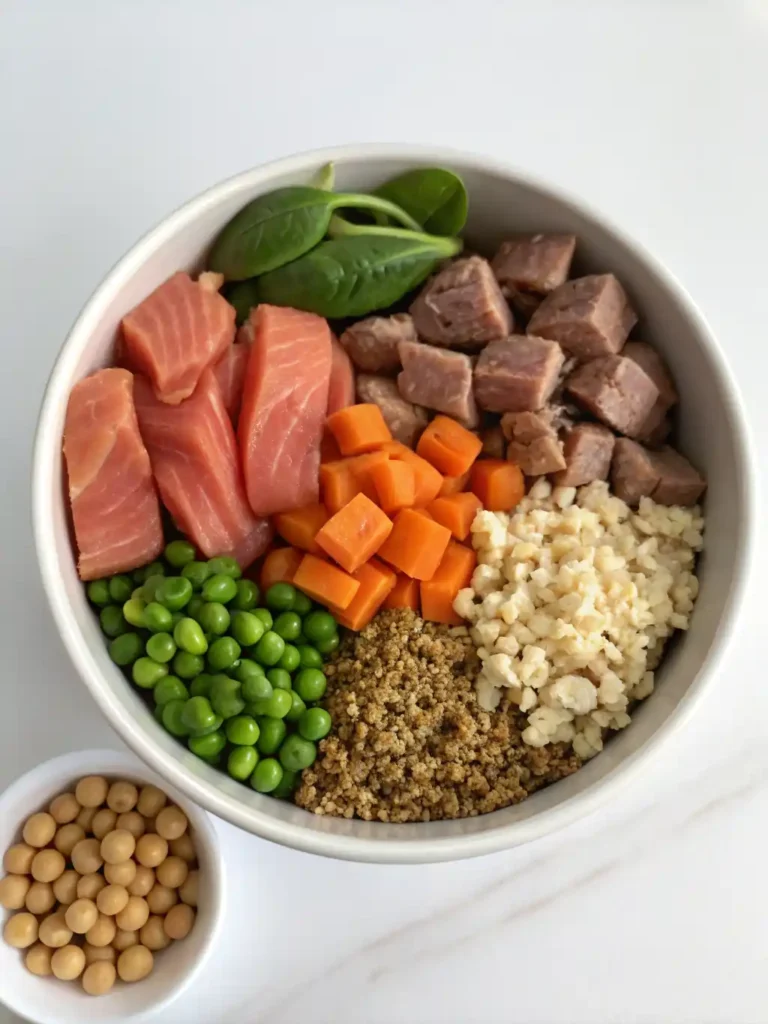
It’s one thing to read about balanced nutrition — it’s another to see it come together in the bowl. These simple, vet-approved recipes show how protein, fat, carbs, veggies, and supplements can work in harmony to fuel your dog’s health.
1. Adult Maintenance Meal
A balanced everyday option for healthy adult dogs.
Ingredients:
- 5 cups cooked lean ground turkey
- 2 cups cooked brown rice
- 1 cup steamed carrots and green beans (chopped)
- 2 tbsp fish oil (added after cooling)
- 1 tsp powdered eggshell calcium
- Dog-safe multivitamin
Why it Works:
This recipe hits the 5:2:1 ratio and adds healthy fats and supplements to ensure a complete nutrient profile.
2. Weight Gain Booster
For underweight or recovering dogs who need extra calories.
Ingredients:
- 5 cups cooked chicken thighs (skin on for more fat)
- 2 cups sweet potatoes (mashed)
- 1 cup spinach (steamed and chopped)
- 2 tbsp coconut oil
- 1 tsp powdered eggshell calcium
- Dog-safe multivitamin
Why it Works:
Higher fat and calorie content support healthy weight gain without overloading on carbs. For more recipes like this, see Vet-Approved Homemade Dog Food for Weight Gain.
3. Sensitive Stomach Soother
Gentle on digestion while still nutritionally complete.
Ingredients:
- 5 cups boiled lean ground beef
- 2 cups cooked quinoa
- 1 cup pumpkin puree (no sugar added)
- 1 tbsp fish oil (added after cooling)
- 1 tsp calcium carbonate
- Dog-safe probiotic supplement
Why it Works:
Quinoa provides a gluten-free carb source, and pumpkin helps regulate digestion.
Next, we’ll explore breed-specific considerations — because not all dogs have the same nutritional needs, especially when it comes to size, metabolism, and activity level.
Breed-Specific Considerations
While the core principles of homemade dog nutrition apply to all dogs, certain breeds have unique needs based on their size, metabolism, and activity level.
Large vs. Small Breeds
- Large breeds (like German Shepherds and Golden Retrievers) benefit from diets that support joint health, including added glucosamine and omega-3s for inflammation control.
- Small breeds (like Chihuahuas or Yorkies) may need higher calorie density in smaller portions to maintain energy without overfeeding.
Active Breeds
Dogs bred for work or endurance — such as the Siberian Husky — require diets with higher fat and protein for sustained energy. In our guide, Siberian Husky Diet: What These Active Dogs Really Need, we cover the exact balance that keeps these high-energy dogs fueled.
Breeds Prone to Sensitivities
Some breeds, like Bulldogs or West Highland Terriers, are more prone to food allergies and benefit from limited-ingredient diets with novel proteins such as duck or venison.
Life Stage Matters Too
Even within breeds, nutritional needs shift with age. Puppies, for instance, need diets rich in protein and calcium for bone development, while seniors often do better with moderate protein and joint support supplements. If you have a Husky pup, check out Husky Puppy Nutrition: How to Feed for Growth for a stage-specific feeding guide.
Next, we’ll wrap up the educational part of this guide with Safety Tips & Best Practices — ensuring the meals you prepare at home are not only nutritious but also safe for your dog to eat.
Safety Tips & Best Practices
Making homemade dog food is an act of love — but love also means keeping your dog safe. Proper food handling, cooking methods, and storage are just as important as choosing the right ingredients.
1. Practice Good Kitchen Hygiene
- Wash hands, utensils, and surfaces after handling raw meat.
- Keep raw and cooked ingredients separate to avoid cross-contamination.
2. Cooking vs. Raw Precautions
If you choose to cook your dog’s food, avoid overcooking nutrient-rich vegetables and add supplements like omega-3 oils after cooling. If you feed raw, follow strict hygiene guidelines to reduce the risk of harmful bacteria — something we discuss further in Raw vs Cooked Dog Food: Which Has Better Nutrition?.
3. Store Food Safely
- Refrigerate cooked meals for up to three days.
- Freeze portions for longer storage, thawing in the fridge before serving.
- Never leave fresh food at room temperature for more than two hours.
4. Watch for Unsafe Ingredients
Some foods that are healthy for humans can be harmful or even toxic to dogs — such as onions, grapes, chocolate, and certain artificial sweeteners. Always double-check ingredients before adding them to your recipes.
5. Transition Slowly
If your dog is switching from commercial food to homemade, do so gradually over 7–10 days. This helps avoid digestive upset and allows your dog’s system to adjust to the new diet.
FAQs
What nutrients should I add to my homemade dog food?
Even with fresh ingredients, homemade dog food often needs extra nutrients to be complete and balanced. The most common additions are calcium, omega-3 fatty acids, vitamin E, zinc, and iodine. Calcium (like powdered eggshell) supports bones and muscles, omega-3s from fish oil help skin and joints, and vitamins/minerals keep the immune system strong. See our full guide: Supplements for Homemade Dog Diets: What’s Missing?
Is homemade dog food nutritious for dogs?
Yes — if it’s properly balanced. Homemade meals let you control ingredients, avoid fillers, and tailor recipes to your dog’s needs. But without the right balance of protein, fat, carbs, vitamins, and minerals, dogs can develop deficiencies. Our guide Homemade Dog Food Nutrition: The Complete Guide explains how to make meals both fresh and complete.
What is the nutritional ratio for homemade dog food?
A common ratio for adult dogs is the 5:2:1 formula — 5 parts protein, 2 parts carbohydrates, 1 part vegetables — plus healthy fats and supplements. Ratios can vary based on your dog’s age, weight, and activity level. For details, see How to Balance Homemade Dog Meals (No Vet Degree Needed).
What is the 80/20 rule for dog food?
The 80/20 rule in dog nutrition usually means 80% animal-based ingredients (meat, organs, eggs, dairy) and 20% plant-based ingredients (vegetables, fruits, healthy carbs). This approach mirrors a more ancestral diet while still including plant nutrients.
What percentage of meat should be in dog food?
For most adult dogs, meat should make up about 40–60% of their diet by weight. This includes muscle meat, organ meat, and sometimes animal-based proteins like eggs or fish. Very active dogs may benefit from a higher percentage.
How much dry food should a 20 lb dog eat per day?
A 20 lb moderately active dog typically eats about 1 ½ to 2 cups of dry food per day, split into two meals. Always check your dog food’s feeding chart and adjust for your dog’s activity level, age, and metabolism.
Final Thought
Feeding your dog homemade meals is one of the most personal, heartfelt ways you can show you care. It’s more than just food in a bowl — it’s love, attention, and intention served at every mealtime.
When I first started cooking for Toby, I didn’t know everything about balancing nutrients or selecting the perfect supplements. I just knew I wanted him to be happy and healthy again. Over time, I learned that homemade dog food works best when it’s both fresh and complete — giving our dogs not just tasty meals, but the full nutrition they deserve.
Whether you’re making a special recipe for weight gain, adjusting the balance of protein, fat, and carbs, or adding the right supplements to fill in nutritional gaps, every choice you make in the kitchen is a choice that impacts your dog’s health.
So cook with care. Learn as you go. And remember: every bowl you make is one more step toward a longer, healthier, and happier life for your best friend.
Because when it comes to our dogs, food is love — one bowl at a time.
If you’re here, you’re not alone. Welcome to the pack.