
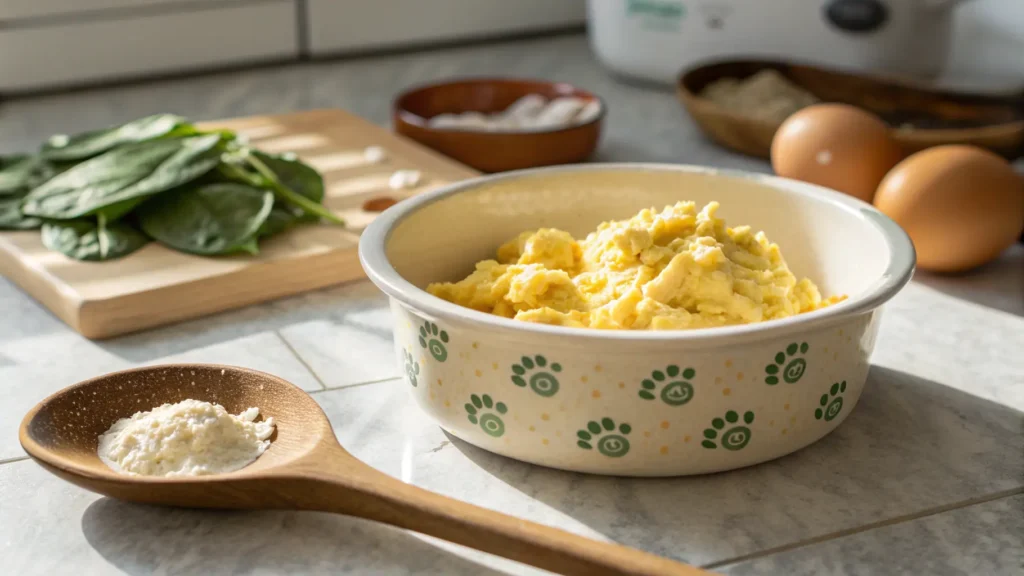
Why Scrambled Eggs Might Be Your Dog’s New Favorite
If you’ve ever cracked a few eggs in the kitchen only to find your dog staring like you’ve uncovered the holy grail of snacks… you’re not alone.
Scrambled eggs are more than just a tasty treat—they’re packed with protein, vitamins, and healthy fats that dogs thrive on. But (and it’s a big but) not every scrambled egg is made equal. The way you cook them—what you add, how often you serve them—can make the difference between a healthy supplement and a dietary mistake.
That’s why we built this guide: to walk you through the safest, simplest, and smartest ways to make scrambled eggs for your dog. Whether you’re cooking for a picky eater, helping a pup with an upset stomach, or just looking to add real food to your dog’s bowl—you’re in the right place.
We’ll break it all down:
- How to cook scrambled eggs safely (with or without a stove)
- What to avoid (like milk or butter)
- How often to serve eggs (yes, there’s a limit)
- When eggs are actually helpful for dogs with diarrhea or tummy trouble
Let’s crack in.
- Why Scrambled Eggs Might Be Your Dog’s New Favorite
- How Can I Cook Scrambled Eggs for My Dog?
- What Is the Best Way for Dogs to Have Eggs?
- Can You Add Milk to Scrambled Eggs for Dogs?
- Can I Microwave an Egg for My Dog?
- Can I Feed My Dog Scrambled Eggs Every Day?
- How to Scramble an Egg in the Microwave (Step-by-Step)
- When Eggs Are Good (or Bad) for Your Dog’s Tummy
- Benefits of Scrambled Eggs for Dogs
- A Simple Egg, Done Right, Can Go a Long Way
- Gentle Scrambled Eggs for Dogs
How Can I Cook Scrambled Eggs for My Dog?
Cooking scrambled eggs for your dog isn’t just about cracking a few eggs and tossing them in a pan. Done right, it’s a fast, wholesome addition to their bowl that supports everything from energy to coat shine.
But let’s get one thing straight—this isn’t brunch food. Your dog doesn’t need the butter, salt, or cheese that comes with your Sunday skillet. What they do need is clean, gentle protein. Here’s how to do it right:
The Gentle Scramble Method (Stovetop)
You’ll need:
- 1 or 2 eggs (organic if possible)
- A non-stick pan
- A splash of dog-safe oil (like olive or coconut—never butter)
Steps:
- Crack eggs into a bowl and whisk gently—don’t add anything else.
- Warm a pan on low heat. Add a tiny drop of oil if needed.
- Pour in the eggs and stir softly as they cook. Low and slow is key.
- Remove from heat when the eggs are just set—still soft, slightly glossy.
- Cool completely before serving. Never serve eggs hot.
This is the same method we use in our Egg Toppers for Kibble Lovers recipe and the protein base in Scrambled Eggs & Turkey Bowl.
Chef’s tip: If your dog is sensitive or on a bland diet, you can skip the oil entirely and use a non-stick pan with just a splash of water.
Can I Bake or Boil Instead?
Absolutely—boiled eggs are a clean option with zero oil, especially if your dog is dealing with a sensitive tummy. You can read our step-by-step version in the Boiled Egg Meal Prep for Dogs post.
FAQ – What’s the Safest Oil to Cook Eggs for Dogs?
The best oil is the one your dog tolerates well and offers extra nutrition:
- Olive oil: gentle on digestion, great for skin
- Coconut oil: can help with coat and odor (in moderation)
- No oil? That’s okay too. You can go oil-free with a quality non-stick pan.
Avoid:
- Butter (too fatty, can cause GI upset)
- Bacon grease (high in salt and nitrates)
- Spray oils with propellants or additives
What Is the Best Way for Dogs to Have Eggs?
Let’s be honest: eggs are one of the most versatile, budget-friendly proteins you can share with your dog. But not every cooking method gives you the same health benefit—or safety.
So, what’s the best way for dogs to eat eggs?
Scrambled (Gently Cooked)
If your goal is digestibility, scrambled eggs win. They’re soft, warm, and super easy on the stomach—perfect for picky eaters, recovering pups, or senior dogs who’ve lost their appetite.
Low heat is key. Overcooked eggs turn rubbery and may reduce nutrient availability. That’s why our go-to method (shared in The Gentle Scramble Recipe) focuses on keeping the eggs soft, never dry.
Boiled (No Oil, No Fuss)
Hard-boiled eggs are a close second—especially for dogs prone to upset stomachs or those on elimination diets. Just peel, slice, and serve. No seasoning, no oil, no worries.
You’ll find this approach in our Boiled Eggs for Dogs with Diarrhea guide.
What to Avoid
- Raw eggs: Risk of salmonella, and raw egg whites can interfere with biotin absorption over time.
- Fried eggs: Too much oil and high heat.
- Omelets or scrambled eggs with cheese, butter, or seasoning: Tasty to us, but not safe for dogs.
FAQ – Should I Cook Eggs Differently for Puppies or Seniors?
Puppies and senior dogs have one thing in common: sensitive systems. The best egg prep for them is soft-scrambled (moist, plain, no oil) or hard-boiled and finely chopped.
Avoid raw eggs for both—it’s not worth the risk, especially for dogs with developing or aging immune systems.
Can You Add Milk to Scrambled Eggs for Dogs?
It’s a fair question. After all, scrambled eggs with milk is how most of us learned to cook them. But when it comes to dogs? That extra splash isn’t always a good idea.
Most Dogs Don’t Need Dairy
Many adult dogs are lactose intolerant to some degree. That means milk—even a few spoonfuls—can lead to gas, bloating, or loose stools. So while a tiny bit might not trigger a major reaction, it often doesn’t offer any benefit either.
When Is Milk Okay?
If your dog tolerates dairy well and has had small amounts of milk before with no issues, a spoonful of lactose-free milk, goat milk, or even bone broth can be a safe way to create a softer egg texture.
But in most recipes—like our Bland Diet Egg & Rice Recovery Meal or Creamy Scrambled Eggs for Seniors—we skip the milk entirely. A bit of water or low-sodium broth gives the same fluff without any risk.
FAQ – What Kind of Milk Is Safe for Dogs?
If you’re set on using milk, here’s a quick cheat sheet:
- Goat milk: Easier to digest, often tolerated in small amounts
- Lactose-free cow’s milk: Safer for most adult dogs
- Regular cow’s milk: Risky for many dogs
- Cream, butter, cheese sauces: Too rich, can upset digestion
Bottom line: If you’re unsure, just skip it. Dogs care more about the smell and texture than whether their eggs taste like brunch.
Can I Microwave an Egg for My Dog?

Yes, you absolutely can. In fact, if you’re short on time or don’t want to use a pan, the microwave can be a safe and effective way to cook eggs for your dog—if you do it right.
Microwaving eggs keeps things quick, but it also comes with a few watchouts. High heat or uneven cooking can create rubbery textures or hotspots that burn your dog’s mouth.
How to Microwave Scrambled Eggs for Dogs
- Crack 1 or 2 eggs into a microwave-safe mug or bowl.
- Add a splash of water or low-sodium broth—no oil, milk, or seasoning.
- Whisk until blended.
- Microwave on medium power for 30 seconds.
- Remove, stir gently, then microwave in 15-second increments until just set.
- Let cool completely before serving.
This method is a variation of our Microwave Egg Prep for Busy Dog Owners, and it’s a favorite for weekday meals or travel-friendly feeding.
Safety Note
Never microwave eggs in their shell—they can explode. Also, avoid adding anything like cheese, butter, or herbs. Keep it plain and simple for your dog’s digestion.
FAQ – Can I Add Anything to Microwave Eggs for Extra Nutrition?
Yes, but keep it simple. Try:
- A sprinkle of ground flaxseed
- A spoonful of plain pumpkin puree
- A few shreds of cooked spinach or zucchini (in very small amounts)
All additions should be dog-safe and free from salt, garlic, or onions. For a full list of mix-ins, check our Healthy Egg Add-Ins for Dogs post.
Can I Feed My Dog Scrambled Eggs Every Day?
It’s tempting—your dog loves them, they’re easy to make, and they seem healthy. But when it comes to daily feeding, even good things need limits.
Scrambled eggs are high in protein and fat, which can be a great boost in moderation. However, feeding them every day—especially as a large portion—can throw off your dog’s nutritional balance if they’re not part of a properly formulated diet.
How Often Is Too Often?
A general guideline: eggs should make up no more than 10% of your dog’s daily caloric intake.
- Small dogs (under 20 lbs): 1 egg, 2–3 times a week
- Medium dogs (20–50 lbs): 1 egg, 3–4 times a week
- Large dogs (50+ lbs): up to 1 egg per day, but not as a full meal
These estimates work best when eggs are used as toppers or mix-ins—not the main dish. In our Balanced Weekly Egg Plan, we show how to rotate eggs in alongside meats, veggies, and grains to avoid excess fat or protein overload.
Risks of Daily Eggs
Feeding eggs daily without adjusting the rest of your dog’s diet can lead to:
- Weight gain (especially in inactive or older dogs)
- Imbalanced fat-to-protein ratios
- Gastrointestinal sensitivity in some breeds
If you’re doing fully homemade feeding, work with a vet or canine nutritionist to include eggs as part of a full protein plan. We cover how to do that safely in our Homemade Dog Food Protein Guide.
FAQ – Is It Okay to Give Eggs Daily if I’m Doing Homemade Feeding?
Yes, but only if your overall recipe is complete and balanced. Eggs are rich in certain nutrients (like biotin and choline) but lack others your dog needs (like calcium, certain amino acids, and trace minerals). That’s why daily feeding should only be done under a vet-approved plan.
How to Scramble an Egg in the Microwave (Step-by-Step)
Whether you’re traveling, short on time, or just avoiding a pan, scrambling an egg in the microwave is a solid option—as long as you stick to a few key steps.
This method is especially useful for those prepping small meals or snacks for dogs with sensitive digestion. No oil, no fuss—just a protein boost your dog will love.
Step-by-Step Microwave Scrambled Egg Recipe for Dogs
- Crack one egg into a microwave-safe bowl or mug.
- Add a tablespoon of water (or low-sodium broth) for moisture.
- Whisk thoroughly with a fork until smooth—no milk, butter, or seasoning.
- Microwave on medium power (50–70%) for 30 seconds.
- Stir gently to break up any hot spots.
- Continue cooking in 15-second intervals, stirring each time, until the egg is just set and soft.
- Let it cool completely before serving.
For an even fluffier texture, check out our Cornstarch Slurry Scramble Method, which uses a small amount of cornstarch and water to make ultra-creamy eggs—safe and satisfying for senior dogs or picky eaters.
FAQ – How Do I Prevent Rubbery Eggs in the Microwave?
Two tips:
- Use medium power, not full power. High heat makes eggs rubbery.
- Stir between intervals, even if it seems “almost done.” This distributes heat and prevents overcooking.
Microwaves cook fast—overcooking by just 10 seconds can turn soft eggs into dry chunks. If in doubt, pull them early and let the residual heat finish the job.
When Eggs Are Good (or Bad) for Your Dog’s Tummy
Scrambled eggs are often recommended when your dog’s stomach is off—but the key is knowing when they help and when to hold back. Eggs are gentle, easy to digest, and loaded with amino acids—but they’re still rich in fat and protein, which isn’t ideal for every upset stomach.
Let’s break it down.
When Eggs Can Help
Eggs can be a good option during:
- Mild diarrhea or loose stool recovery
- Appetite loss (picky dogs often accept eggs when nothing else works)
- Recovery from illness or surgery (light protein source)
In our Rice and Eggs for Dogs with Diarrhea post, we pair soft-scrambled eggs with plain white rice for a gentle, easily tolerated meal. It’s especially helpful in the first 24–48 hours after symptoms appear—just make sure your vet approves it based on your dog’s condition.
When Eggs Might Make Things Worse
Avoid feeding eggs if your dog:
- Has pancreatitis or a history of fat-sensitive GI issues
- Is currently vomiting, especially with bile or blood
- Has shown allergic reactions to eggs in the past
Some dogs may also struggle with egg white sensitivity, which can show up as itchiness or GI upset after a few feedings. In that case, refer to our Egg-Free Protein Alternatives Guide for bland diet backups.
FAQ – Are Eggs a Bland Diet Option for Sick Dogs?
Yes—when prepared correctly. Soft-scrambled or hard-boiled eggs, with no seasoning or added fat, can support recovery for dogs with mild stomach upset. They should always be paired with a bland starch like rice or boiled potatoes and introduced slowly, in small portions.
If diarrhea lasts more than 48 hours or worsens, skip the eggs and talk to your vet.
Benefits of Scrambled Eggs for Dogs
Scrambled eggs might seem simple, but nutritionally? They punch far above their weight. If you’re looking for a high-quality, whole-food protein to supplement your dog’s meals—eggs deserve a spot in the rotation.
What’s Inside an Egg (That Helps Your Dog)
Each cooked egg contains:
- High-quality protein — Supports lean muscle, tissue repair, and immune function
- Biotin — Promotes healthy skin, coat, and metabolism
- Vitamin A — Supports eye health and immunity
- Riboflavin (B2) — Helps convert food into energy
- Selenium — Acts as an antioxidant and supports thyroid health
- Choline — Crucial for liver function and brain development
In other words, a scrambled egg isn’t just a treat—it’s functional fuel. That’s why we feature eggs so often in nutrient-dense recipes like Turkey & Egg Muscle Bowls and our Senior Dog Energy Boosters collection.
When to Use Eggs for Maximum Benefit
- After activity or training: Protein helps muscle recovery
- For shiny coat support: Biotin + healthy fats = natural glow
- For underweight dogs: Eggs can boost calories in small servings
- During seasonal shedding: Extra nutrients support hair regrowth
They’re also handy when transitioning dogs to homemade diets. Eggs help fill nutritional gaps in many starter-friendly meal plans, especially when combined with rice, lean meat, or gentle veggies.
FAQ – Do Eggs Help with Shedding or Coat Health?
Yes—especially when fed consistently as part of a balanced diet. The biotin and healthy fats in eggs nourish your dog’s skin and coat from the inside out. You may notice a glossier coat and less dryness or flaking after 2–3 weeks of adding scrambled egg (just a few times per week).
A Simple Egg, Done Right, Can Go a Long Way
At the end of the day, scrambled eggs are more than just a quick add-on—they’re one of the most accessible, affordable, and biologically valuable foods you can feed your dog. When cooked gently and served in moderation, they offer a boost of protein, vitamins, and comfort—especially on days when your dog’s stomach is off or their appetite dips.
But like with all good things, it comes down to how you use them. Skip the butter, hold the salt, and don’t overdo it. Use eggs as a topper, a recovery meal base, or a once-in-a-while training reward. Your dog will love you for it—and their gut, skin, and energy levels just might show it.
Looking for next steps?
- Try our Egg & Rice Digestive Reset Recipe if your dog’s been off their food
- Explore our Egg-Based Weekly Meal Plan to rotate nutrition safely
- Or browse the Complete Egg Cooking Guide for Dogs for more prep ideas
Whichever route you go, remember: a well-cooked egg is one of the best tools in your homemade feeding toolbox. Keep it simple, keep it clean—and most of all, keep it joyful.
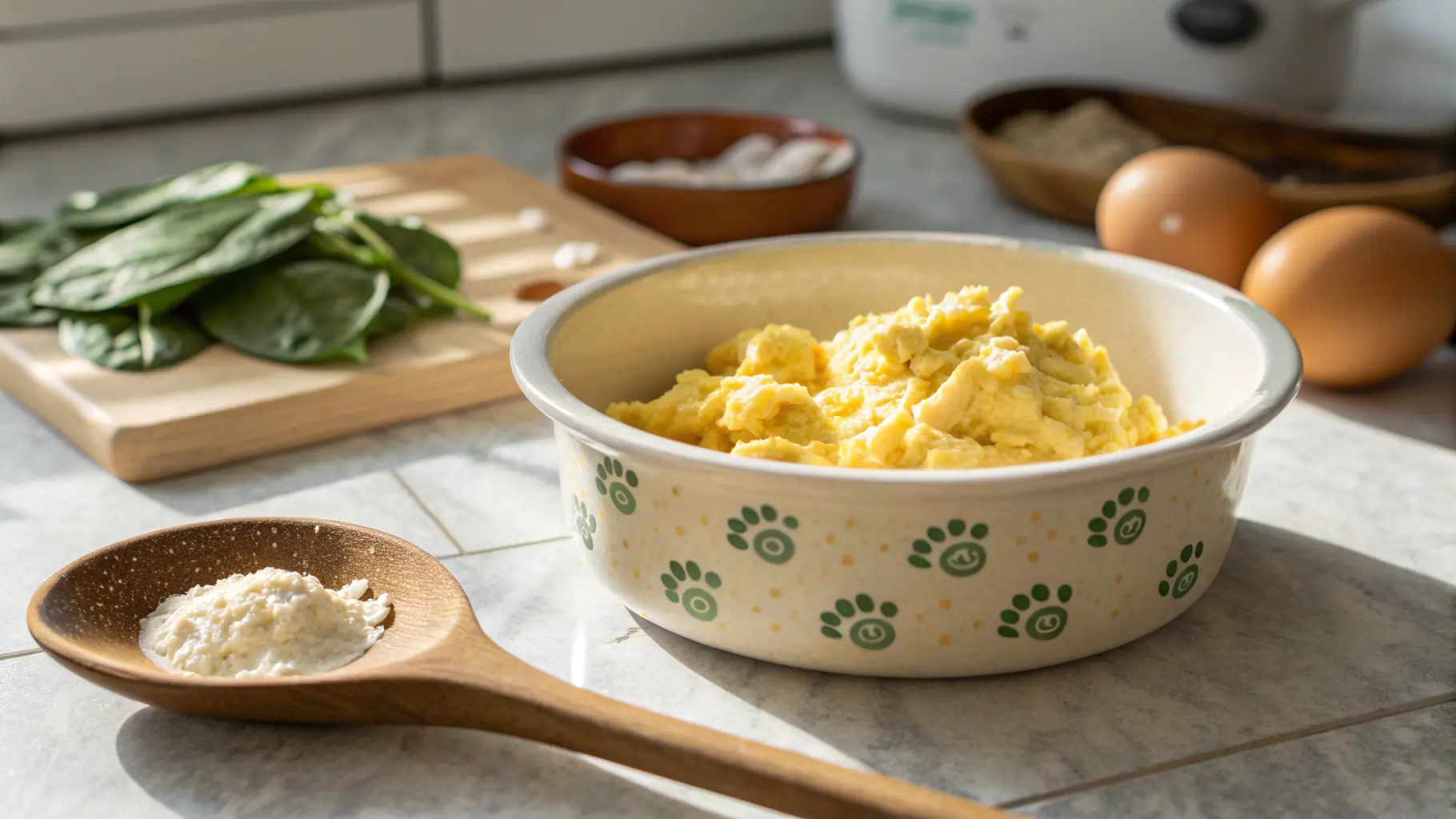

Gentle Scrambled Eggs for Dogs
Ingredients
Equipment
Method
- Crack one egg into a bowl or mug that is microwave-safe or suitable for stovetop use.
- Add one tablespoon of water or low-sodium broth. Do not add milk, butter, or seasoning.
- Whisk thoroughly until the mixture is smooth and uniform.
- Cook using one of two methods:
• Stovetop on low heat with optional oil
• Microwave on medium power for 30 seconds, stir, then cook in 15-second intervals until soft and just set. - Let the scrambled egg cool completely before serving to your dog.